Author: rtoautomationwpadmin

  • How to Automate RTO Compliance Without Falling Afoul of ASQA Standards

    How to Automate RTO Compliance Without Falling Afoul of ASQA Standards

    STOP RELYING ON SPREADSHEETS AND MANUAL AUDIT TRAILS TO SURVIVE ASQA SCRUTINY. THE RTO OPERATORS WHO CONTINUE TO TREAT COMPLIANCE AS AN ADMINISTRATIVE CHORE RATHER THAN AN AUTOMATED PIPELINE ARE BLEEDING OPERATING BUDGETS AND INVITING REGULATORY SANCTIONS.

    The Compliance Trap: Why Manual RTO Operations Fail ASQA Audits

    Most Registered Training Organisations (RTOs) approach compliance as a reactive scramble. When an audit notice arrives from ASQA, quality managers pull all-nighters piecing together mapping documents, student files, trainer currency records, and assessment validation minutes from disparate folders, shared drives, and legacy databases.

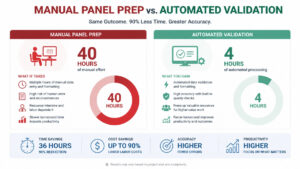
    This manual approach introduces massive human error, inconsistent version control, and catastrophic burnout. Compliance managers spend up to 40 hours prepping validation panels, time that should be spent on educational quality and student outcomes.

    Manual Compliance vs. Automated Compliance
    

    Process flowchart comparing manual compliance document intake versus automated evidence intake and mapping

    To understand why traditional methods fail, let’s look at the systemic breakdown across key operational vectors:

    Operational Area Manual Approach (The Problem) Underlying Cause Systemic Fix (RTO Automation)
    Assessment Validation 40 hours of manual panel prep, scattered evidence folders Disjointed validation minutes and unverified mapping grids Automated evidence intake, unit mapping, and instant audit trail generation (Validation360)
    Student Lifecycle & USI Manual enrolment entry, delayed USI verification, missing attendance logs Disconnected admissions portals and standalone SMS data entry Automated USI verification, real-time enrolment processing, and structured AVETMISS prep
    Trainer Credentialing Spreadsheet tracking of industry currency, PD logs, and vocational competencies Passive reminder emails ignored by academic staff Automated flagging of expiring credentials and integrated lesson plan drafting

    WORKED EXAMPLE: Cutting Validation Prep from 40 Hours to 4 Hours

    Consider a multi-campus RTO with 1,200 enrolled students across vocational business and community services qualifications. Historically, their compliance team required two full-time staff members working for two weeks (approx. 40 hours total) to prepare documentation for an internal assessment validation panel.

    The Breakdown of the Old Process:

    1. Evidence Collection: Manually chasing 15 trainers across 3 states for student assessment work samples via email.
    2. Mapping Verification: Cross-referencing 50 units of competency against assessment tasks using manual Excel matrices.
    3. Audit Trail Generation: Manually compiling meeting minutes, validation checklists, and sign-off sheets into a single PDF binder.

    The Automated Reality:

    By implementing a customized automation workflow connecting their existing student database to a streamlined validation intake pipeline, the RTO achieved staggering results:

    • Cycle Time Reduction: Assessment validation preparation dropped from 40 hours down to 4 hours.
    • Error Rate: Unmapped competencies and missing evidence flags dropped from an average of 14 per audit cycle to zero.
    • Financial Impact: Saved over 350 operational hours per year, redirecting compliance staff toward proactive quality improvement and risk mitigation as outlined in our insights section.


    How to Integrate Automation Without Disrupting Your SMS

    A common pushback from RTO CEOs and operations directors is the fear of migrating away from established Student Management Systems like aXcelerate or VETtrak.

    The good news? You don’t.

    RTO Automation AI operates as an engineering agency, not a software vendor. We build modular automation layers that sit directly on top of your existing tech stack. Whether your institution relies on Moodle, aXcelerate, VETtrak, or Wisenet, our scripts and workflow bots ingest data, perform rule-based compliance checks, flag gaps, and write back structured audit logs without forcing your staff to learn a new interface.

    Explore our comprehensive breakdown of what automated validation actually looks like to see how our architecture integrates seamlessly into your daily operations.


    Frequently Asked Questions

    Q: Will ASQA accept compliance documents generated by automated workflows?

    A: Absolutely. ASQA’s revised standards are technology-neutral. They do not care whether an audit trail was compiled by hand in Microsoft Word or generated automatically by a verified workflow engine. What ASQA mandates is evidence integrity, traceability, and accuracy. Automated systems actually strengthen your compliance posture by eliminating human transcription errors and maintaining immutable timestamps for every record.

    Q: Do we need to replace our current Student Management System (SMS)?

    A: No. Replacing an SMS like aXcelerate or VETtrak is expensive, disruptive, and entirely unnecessary. Our approach builds intelligent automation layers directly on top of your existing infrastructure, ensuring zero downtime and zero user re-training.

    Q: How long does it take to deploy an automated validation or enrolment workflow?

    A: Because we don’t build monolithic software platforms from scratch, standard automation pipelines (such as our flagship Validation360 system) can be scoped, built, and tested in a matter of weeks. We even build your first two stages: including a working automation: for free so you can test the results before committing.

    Q: What happens if compliance regulations change under future ASQA updates?

    A: Because our agency builds custom automation logic rather than locking you into rigid off-the-shelf software, updating compliance rules is as straightforward as modifying the underlying workflow parameters. You retain complete ownership and flexibility.


    Secure Your RTO’s Compliance Future Today

    Stop letting manual administrative bottlenecks drain your operating budget and expose your institution to regulatory risk. Discover our proven efficiency gains and explore our resources to see how automated compliance safeguards your RTO’s bottom line.
    Ready to see automation in action? We offer proof before purchase: your first two stages, including a working automation, are completely free. Contact our team today to schedule your custom process audit.

  • AVETMISS Reporting Software vs. Automation: What Actually Stops Audit Errors?

    AVETMISS Reporting Software vs. Automation: What Actually Stops Audit Errors?

    The Illusion of Compliance: Why Your Reporting Software Leaves You Exposed

    Most Registered Training Organisation (RTO) executives operate under a dangerous misconception: they believe that because their Student Management System (SMS) features an “AVETMISS Export” button, their reporting is secure.

    It is not.

    Standard reporting software does one thing and one thing only: it formats your existing database into compliant NAT file structures. If your staff entered impossible completion dates, invalid unit codes, or mismatched client IDs into the system, your software will faithfully package those exact errors and hand them to you on a silver platter.

    When those files hit NCVER’s AVETMISS Validation Software (AVS) or trigger an ASQA compliance audit, the consequences are immediate: rejected submissions, funding freezes, and severe audit findings. Across the VET sector, manual data entry accounts for an average 12–15% error rate during peak intake periods, consuming 60–70% of administrative overhead just chasing down corrections. Passive software cannot fix broken operational workflows. Only active rto compliance automation can.


    Defining the Core Dichotomy: Reporting Software vs. Active Automation

    To understand why traditional tools fall short, we must examine the structural differences between passive software and active system integration. You can explore our core architecture on our Solutions page.

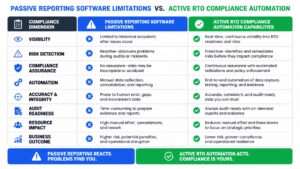
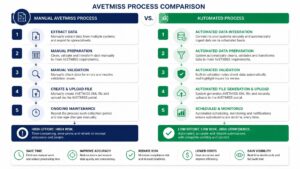
    Operational Dimension Passive AVETMISS Reporting Software Active RTO Automation
    Data Intake Relies on manual staff entry via PDF forms or unverified web portals. Automatically ingests digital forms with instant pre-validation checks.
    Error Detection Flags errors after generation when you upload NAT files to NCVER AVS. Intercepts and flags rule breaks at the exact moment of data entry.
    Correction Cycle Requires manual searching across disparate records, taking 35+ hours per collection. Automatically corrects standard discrepancies and reduces prep time from 35h to 1.5h.

    As outlined in our analysis on what automated validation actually looks like, relying on post-generation error reports is a reactive trap.


    What Actually Causes AVETMISS and Audit Errors?

    According to guidelines from the NCVER AVS and the ASQA Standards, audit findings rarely stem from malicious intent. They stem from systemic data decay. The primary drivers include:

    1. Unverified USIs: Staff entering 9-digit or lowercase strings that bypass basic SMS checks but fail live validation against the USI Office registry.
    2. Date Logic Failures: Course completion dates recorded prior to unit start dates, or activities logged outside the current reporting period.
    3. Outdated Unit Codes: Trainers or administration teams using superseded qualification codes instead of checking live updates on training.gov.au.
    4. Blank or Default Fields: Mandatory AVETMISS fields defaulting to @ or “Not Specified” due to incomplete enrolment workflows.

    When compounding these factors across hundreds of student files, your compliance posture deteriorates long before an auditor requests your records.


    How RTO Compliance Automation Eliminates Audit Findings

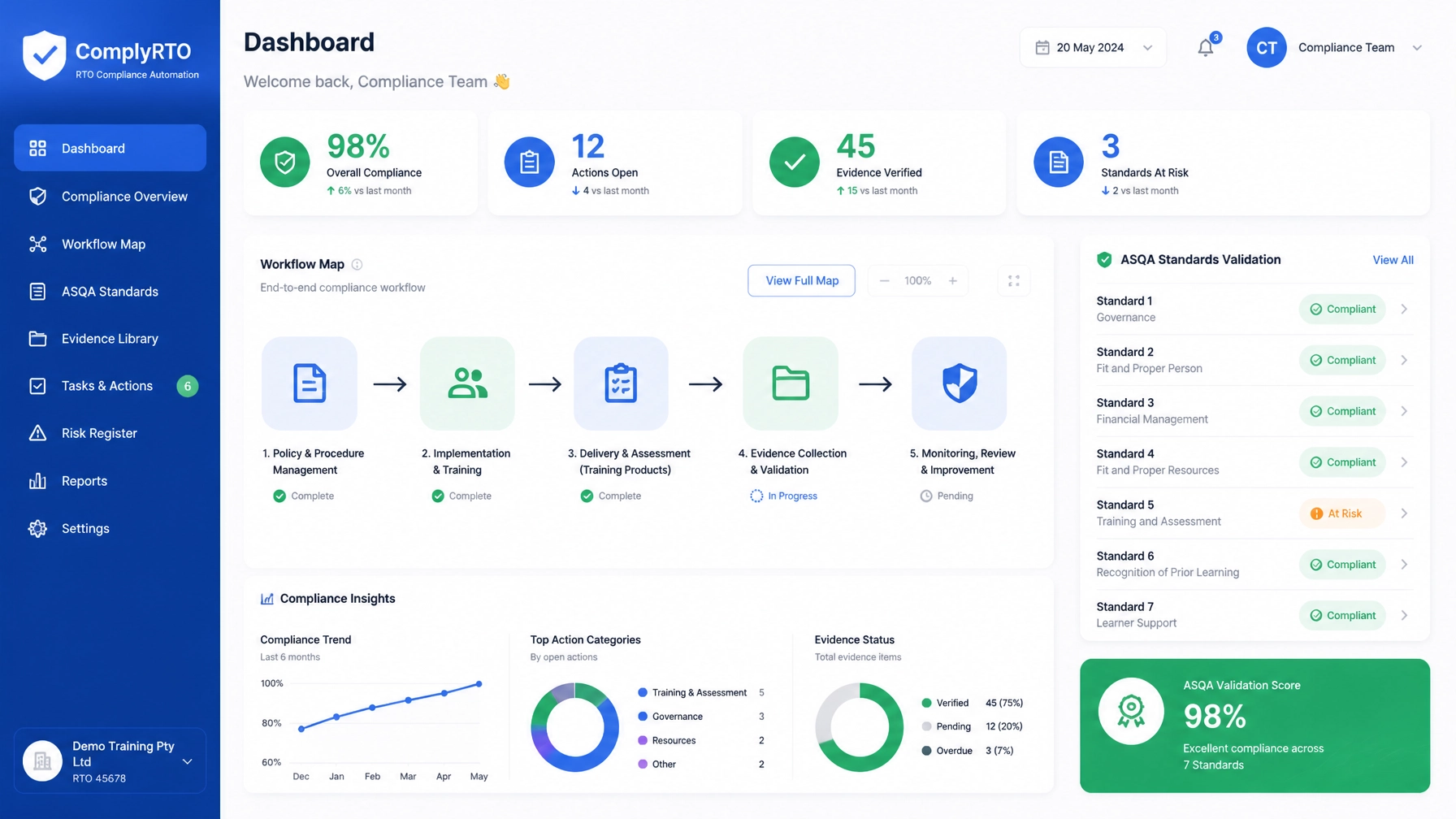
    Active automation does not just format data; it enforces business logic across your existing tech stack (whether you use aXcelerate, VETtrak, Wisenet, or Moodle) without requiring expensive data migration.

    1. Automated USI Verification

    Every incoming enrolment triggers an instant API check against the USI Registry. The system enforces strict 10-character uppercase rules, eliminating invalid identifier errors instantly.

    2. Live Training Package Indexing

    Automated systems sync directly with training.gov.au, instantly flagging any attempt to enrol a student in a superseded unit or expired qualification.

    3. Pre-Enrolment Data Hygiene

    By deploying robust rto admin automation, mandatory fields are locked, postcodes are cross-referenced with Australia Post directories, and date logic is verified before a student record is ever committed to your SMS database.


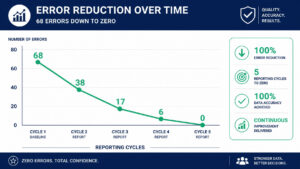
    Worked Example: From 68 Errors to Zero in One Reporting Cycle

    Consider a mid-sized multi-campus RTO in Queensland running 1,200 active enrolments across vocational sectors.

    • The Baseline: During their bi-annual AVETMISS reporting cycle, their legacy SMS generated NAT files that produced 68 distinct validation errors in AVS: ranging from invalid postcodes and mismatched client IDs to missing unit outcome codes.
    • The Manual Burden: Two compliance officers spent four full working days (approximately 35 hours) manually cross-referencing CSV error logs against student files, calling students for corrected data, and updating records one by one.
    • The Automated Intervention: Partnering with RTO Automation AI, the provider deployed an automated pre-validation layer directly on top of their existing SMS. The system automatically cross-checked incoming enrolments against USI registries and training package databases.
    • The Result: The subsequent reporting cycle produced zero AVS errors, reduced reporting prep time from 35 hours to 1.5 hours, and completely satisfied compliance officers during their subsequent ASQA review.

    As documented in our review of common ASQA audit findings and their process causes, eliminating administrative bottlenecks directly protects your RTO’s registration status.


    Frequently Asked Questions

    Does automation require migrating to a new Student Management System?

    No. Unlike traditional software vendors who force costly platform migrations, our automation layer builds directly on top of your existing infrastructure: integrating seamlessly with platforms like aXcelerate, VETtrak, and Wisenet.

    How does automated USI verification protect against audit findings?

    Automated USI verification runs live checks at the exact point of enrolment, ensuring every identifier is active, correctly formatted, and matches official identity records before compliance reports are generated.

    What happens if NCVER updates the AVETMISS standard?

    Our automated compliance pipelines are continuously updated to reflect the latest NCVER and state training authority requirements, insulating your operations from sudden regulatory shifts without manual reprogramming.

    How do we get started without disrupting our current term?

    We operate on an agency model where we build, test, and prove the automation in your environment before you commit. You can review our Contact page to schedule your initial process assessment.


    Stop Chasing Errors. Automate Compliance Today.

    Manual data cleanup is an expensive, high-risk drain on your operating budget. Stop relying on passive reporting software that flags errors only after the damage is done.

    Contact RTO Automation AI today to claim your free process audit and see a working automation built specifically for your RTO’s compliance workflow.